TikTok Shop Samples Delivered. Where Are the Posts?

You can ship a lot of product and still have very little to show your team on Friday.

Before you approve another batch of TikTok Shop samples, check what happened to the last one. Track delivery, the creator’s current posting deadline, a verified content link, and the cost of getting that sample into their hands. Keep samples that are still within their posting window separate from those that are overdue.

The tricky part is deciding which samples to count. If half arrived yesterday, dividing this week’s posts by everything you’ve shipped makes the program look worse than it is.

Start with the actual sample status

For US free samples, TikTok’s sample guide says creators must post within 14 days of receiving the product. Its Sample Integrity Policy also describes a one-time seven-day extension and an appeal option. Check the actual order status before deciding a creator has missed a deadline. TikTok says sellers do not receive extension notifications, so confirm any unclear deadline with the creator rather than assuming no notification means no extension.

Use delivery as the starting point. An approval date tells you when your team said yes; it doesn’t tell you when the creator had a product to film.

TikTok’s seller sample-management guide explains how sellers can track requests and content through Affiliate Center. Use that record as your starting source. A separate worksheet is useful for adding ownership, costs, and the next action your team needs to take.

Keep free samples, refundable samples, and separately negotiated creator work distinguishable. They can have different obligations. This worksheet focuses on seller-approved free samples.

A DIY TikTok Shop sample-tracking worksheet for your team

This free worksheet is for brands managing samples in-house. BPM tracks sample delivery, creator follow-through, content, and costs through its own operating process. The workbook is a DIY resource, not the reporting format or a per-sample spreadsheet deliverable included in BPM’s services.

Download the free TikTok Shop sample tracker (Excel). It includes 100 order rows, posting-rate and sampling-cost calculations, and fields for content permissions. No email signup required.

Use one workbook per batch, enter a fixed review date, and record each sample order once. The tracker separates open windows and exceptions from evaluated orders. You can also copy these fields into your team’s working document:

Field What to record
Creator and sample order Handle, order ID, product and variation
Delivery Confirmed arrival date; flag missing or damaged parcels
Current deadline Applicable deadline and any confirmed change; note when confirmation is still needed
Status In transit, within window, exception under review, posted, or overdue
Content evidence Verified post URL or available LIVE record, plus the date checked
Product link Whether the correct product is attached and available
Content permissions Permitted channels and uses, permission evidence, duration and expiry date
Sample cost Product cost, packing and outbound shipping; include replacements
Follow-up Last contact, the actual issue, next action and named owner
Commercial outcome Orders and returns for a stated reporting window, kept separate from posting status

Avoid one catch-all “pending” column. A lost package needs a fulfillment fix. A delivered sample with an unresolved product question needs an answer. An overdue sample with no response needs a different decision. Those shouldn’t look identical in the report.

These are suggested internal labels, not a reproduction of TikTok’s interface or official fulfillment metric.

Measure a batch that has had time to post

For an internal follow-through measure, pick a delivered batch and wait until its posting windows have closed. Keep unresolved exceptions separate until you can classify them fairly. Track exempted orders separately too, with their costs still visible.

Batch posting rate = evaluated sample orders with verified content ÷ all evaluated sample orders whose applicable posting windows have closed.

Use the same set of orders on both sides of that calculation. Count an order once, even if a creator makes three videos. Track the number of individual assets separately. Record when you checked the batch and distinguish on-time posts from late posts if you update the report.

Here’s a hypothetical example, not a BPM client result:

  • You shipped 100 samples.
  • Forty are still within their posting windows.
  • Sixty have reached the end of their applicable windows, with no unresolved exceptions.
  • Thirty-six of those 60 produced verified content.

Your completed-window posting rate is 60%. The other 40 samples are still open. Report them alongside the rate so nobody mistakes this for the final result of all 100 shipments.

Then put dollars beside it. If the 60 evaluated samples cost $900 in total product, packing and shipping, that’s $25 per sample order that produced content: $900 divided by 36. Include costs for the orders that didn’t produce a post. Leaving them out hides the cost you’re trying to understand.

This is a sampling-cost measure. It excludes staff time, agency fees and other costs unless you add them explicitly. It also doesn’t tell you whether the content generated profitable sales. If no orders produced content, report the spend and zero posts; a cost-per-post figure cannot be calculated.

For the wider operating plan, see what belongs in a TikTok Shop launch budget.

Follow up with something useful

Once a sample arrives, a short check-in can surface a problem before the deadline. Ask whether the correct variation arrived and whether the creator needs factual product information. Give them a useful demonstration idea without scripting an opinion they haven’t formed.

For example:

Hi [name], checking that [product] arrived in good shape. Is there anything you need to try it or show how it works? We have [date] recorded as the posting deadline. Has that changed? If there’s a delivery or product issue, let us know so we can help with the right next step.

Use the actual date and issue. Don’t send a deadline reminder to someone whose package is still missing. Keep follow-ups reasonable and record the response so another teammate doesn’t ask the same question tomorrow.

If several creators stall on the same product, look for a shared cause: the wrong variation, confusing instructions, an unavailable listing, or a product that needs more explanation than the brief provides. The worksheet should help you find something to fix.

From sample activity to a broader program review

In Flower Shop’s June 1–September 24, 2026 report, 456 samples shipped, 290 creators posted, and 406 videos were published. Those are different units: sample shipments, people, and assets. They should not be divided into a sample-completion rate without matching the same orders and posting windows. Read the Flower Shop case study to see how creator activity fits alongside Shop sales and product performance.

A posted video is the next checkpoint

A verified post is not automatically an ad-ready asset. Confirm the required authorization and permitted uses before paid promotion.

A creator fulfilling a sample obligation is progress. Your next question is whether the content helps a buyer understand and buy the product.

Check what was actually shown, whether the product link works, and what sales and returns look like over a consistent window. Keep paid promotion distinguishable when evaluating results. If you want to reuse a creator’s content in ads or elsewhere, confirm the permissions for that use rather than treating the sample as automatic ownership of the asset.

When you’re evaluating an agency, ask to see how it connects these records. Who approves samples? Who handles delivery issues? Who follows up? What happens to the next sampling decision when a batch produces posts but few worthwhile orders?

Our guide to choosing a TikTok Shop agency covers the broader questions to bring to that conversation. If you need help connecting creator work with the rest of your shop, explore BPM’s TikTok Shop services.

Bring the last completed batch to the conversation. A clear record of what arrived, what got posted and what it cost is more useful than another big shipment count.


Bring Finance Into Your Next Agency Conversation

Your next agency meeting is an opportunity to connect campaign decisions with the economics of your business. Bringing the person who owns your financial numbers into that conversation gives everyone a clearer starting point.

We created a practical resource to help: the Financial Transparency Checklist for Agencies and Clients.

What to bring to the conversation

Start with the information that affects what your business keeps from a sale: product or service delivery costs, discounts, fulfillment, returns, and commissions. Ask your finance lead to clarify which costs are included in your margin figures and whether those figures are before or after advertising.

You can begin with a focused summary, category-level margins, or agreed acquisition targets. Establish who can access the information and how you will update it when costs change.

A shared agenda for marketing and finance

The checklist helps your team work through five areas:

  • Agreeing on what success means for the business.
  • Identifying costs that sit outside campaign dashboards.
  • Sharing useful information with clear boundaries.
  • Turning financial inputs into campaign decisions.
  • Holding a 30-minute monthly review with named owners and next steps.

It also includes a meeting record you can copy into your own working document. Use it during onboarding or bring it to an existing agency relationship when targets, costs, or growth plans change.

Make the next decision together

Profit-First Marketing starts with better questions. Before agreeing to a new campaign target or a larger budget, give your agency and finance team a chance to compare their assumptions. The goal is a recommendation everyone can understand and evaluate against the business’s needs.

Open the checklist linked above, choose a finance owner and an agency owner, and make the first conversation about what information is missing.

How to Choose a Paid Social Agency for E-Commerce

Hiring a paid social agency means trusting someone with two things: your advertising budget and the decisions that determine where it goes.

The pitch usually sounds good. Better creative. Smarter targeting. More growth. But when every agency promises performance, how do you evaluate who can actually help your business?

Start with five things: how they understand your margins, measure results, develop creative, approach scaling, and explain their work.

A strong e-commerce paid social agency should be able to connect those pieces into a clear plan for your brand. Here are the questions to ask—and what useful answers look like.

1. Do they understand what you can afford to spend to acquire a customer?

Before recommending a budget, an agency should understand the economics of an order.

That includes your average order value, product costs, discounts, shipping subsidies, fulfillment costs, and returns. Repeat purchases matter, too, but an acquisition plan should distinguish between repeat revenue you’ve measured and repeat revenue you’re hoping for.

Consider a simplified example: a customer places a $100 order, and you have $40 left after variable costs, before advertising. Spending $40 to acquire that order leaves nothing to cover agency fees, fixed overhead, or profit.

That’s why a ROAS target needs context. ROAS—return on ad spend—compares attributed revenue with advertising spend. It doesn’t tell you how much money the business keeps.

Ask a prospective agency:

“How would you determine our acquisition cost target, and what information would you need from us?”

Look for an answer grounded in your business. A useful conversation will include product margins, first-time versus returning customers, and how quickly you need to recover acquisition costs.

You should also understand the full cost of hiring an e-commerce paid social agency: media spend, management fees, creative production, and any additional tools or services.

Bring our agency-client financial transparency checklist to onboarding. It helps both teams agree on the financial inputs, access boundaries, and monthly review process.

2. Can they explain how they’ll measure results?

An agency needs a way to check whether the numbers guiding its decisions are dependable.

Ask how it will review conversion tracking, compare ad-platform reporting with store results, and account for differences between reporting systems. It should explain which numbers inform daily campaign decisions and which help evaluate the overall business.

For example, platform-reported ROAS and store revenue divided by total advertising spend answer different questions. Neither should quietly substitute for the other in a performance report.

Purple star-shaped Pip Pop Post earrings on branded packaging
Pip Pop Post: building the measurement foundation before scaling paid social.

At Best Practice Media, our work with Pip Pop Post began with the measurement foundation. The account had inconsistent conversion tracking and a fragmented campaign structure. We established tracking, rebuilt the campaign approach, and introduced structured creative testing before expanding spend. The published case study reports that managed ad spend grew 14-fold in just over a year while ROAS held at 3.36. Read the Pip Pop Post case study.

The useful hiring question is:

“What would you check before trusting the performance data in our account?”

A good answer should describe specific checks and explain what happens if the data is incomplete.

3. Is there a clear plan for creative?

“Creative testing is included” can mean very different things.

One agency might produce new concepts, write scripts, and coordinate production. Another might resize assets your team supplies. Both can be valid arrangements, but you need to know which one you’re buying.

Ask who owns each step: customer research, concepts, copy, production, approvals, launch, and analysis. Find out what your team will need to provide and how often.

Then ask:

“Show us how a finding from one creative test shapes the next.”

A useful answer might explain how the team would test a product demonstration against a customer story, identify which buying concern each addresses, and use purchase performance to guide the next round.

Our Cacao & Cardamom case study illustrates the connection between creative and campaign performance. The work included a creative refresh tailored to a luxury gifting audience alongside changes to campaign optimization. The published results include a 34% improvement in ROAS and a 13% reduction in cost per purchase while managed spend more than doubled. Read the Cacao & Cardamom case study.

Those results reflect the combined program. When evaluating an agency’s e-commerce case studies, ask the agency to separate what it tested from what it can confidently attribute to a particular change.

4. What earns a budget increase?

Increasing spend should follow a decision process you understand.

Before recommending more investment, an agency should consider performance against your targets, the amount of evidence available, inventory, promotional plans, and your capacity to fulfill additional orders.

Ask:

“What would make you increase our budget—and what would make you hold it steady or reduce it?”

Look for clear decision criteria. You should know what success means, how the team will evaluate it, and how it will respond if efficiency changes as spend grows.

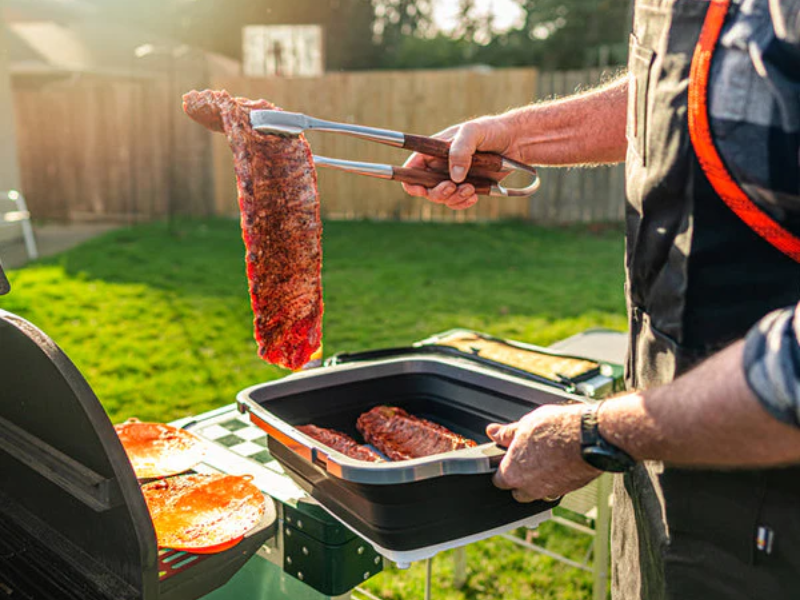
Outdoor barbecue preparation using a Drip EZ tub
Drip EZ: evaluating growth alongside advertising efficiency.

For Drip EZ, BPM’s work combined campaign management, creative and copy changes, and audience strategy. The published case study reports a 430% increase in managed ad spend alongside a 25% improvement in ROAS and a 15% reduction in cost per purchase. Read the Drip EZ case study.

When an agency presents results like these, ask about the comparison period, starting budget, attribution settings, and any changes to pricing or promotions. That context helps you understand how relevant the example is to your situation.

A case study demonstrates experience. Your own scaling plan still needs to be built around your numbers.

5. Will you understand what’s happening in your account?

Before signing, ask to see an example of the reporting and communication you’ll receive.

A useful update should explain what happened, what the team thinks drove it, what remains uncertain, and what it plans to do next. It should also identify decisions or materials needed from your team.

For example, “ROAS declined this week” tells you very little on its own. You need to know whether spend changed, a promotion ended, product availability shifted, or the campaign reached a different customer mix—and what the agency will investigate.

Clarify these responsibilities before the engagement begins:

  • Who manages your account and who is your primary contact?
  • How often will you discuss performance and next steps?
  • Who approves creative and budget changes?
  • Who owns the advertising accounts, data, and creative assets?
  • What happens during onboarding and if the relationship ends?

The answers should make the working relationship easy to picture. Our guide to your first 90 days with a paid social agency outlines the onboarding, testing, and reporting milestones to discuss.

Choose the agency whose reasoning you can evaluate

The right paid social partner should help you understand how your budget becomes a test, how that test produces learning, and how the learning informs the next investment.

Bring your margins, recent store performance, current advertising results, and growth goals to the conversation. Ask the agency to explain what it would investigate first—and why.

At Best Practice Media, our paid social services bring together campaign strategy, creative testing, measurement, and ongoing optimization. If you’re evaluating support for your e-commerce brand, book a free strategy call to discuss your current program and where to focus next.

What Does an E-Commerce Paid Social Agency Cost?

The cost of an e-commerce paid social agency includes more than its management fee. To compare proposals fairly, separate the agency retainer, the money paid to ad platforms, and creative production. Then check what each fee actually covers.

At Best Practice Media, we charge a retainer rather than a percentage of ad spend. Our fee does not automatically grow when your media budget grows. That matters because sometimes the strategic recommendation is to spend less: pause a weak offer, fix a conversion problem, or wait until inventory can support demand.

What are you actually paying for?

  • Media spend: The budget paid to platforms such as Meta. This buys distribution; it is separate from the agency fee.
  • Agency management: Strategy, campaign setup, optimization, analysis, communication, and the specific services listed in your agreement.
  • Creative production: Concepts, copy, design, editing, shoots, or creator content. Ask which are included and which are additional.
  • Supporting work: Tracking implementation, landing pages, product feeds, and reporting tools may have separate scopes.

A low management fee can become an expensive engagement if the work you need sits outside the proposal. An all-inclusive fee can also be poor value if you are buying services you will not use. Compare the scope before comparing the total.

Retainer versus percentage of ad spend

A percentage model links the management fee to the media budget. A retainer prices an agreed scope of work. Neither model tells you, on its own, whether an agency will make good decisions.

We prefer a retainer because it removes an automatic fee increase from the decision to increase spend. We want to be able to recommend a budget cut without that recommendation mechanically cutting our management fee.

A retainer still needs clear boundaries. If you add a platform, a market, or substantially more creative work, ask how a scope change would be handled. “Retainer-based” should not mean “everything, forever.”

How to calculate the full monthly investment

Use this starting point:

Total monthly investment = media spend + agency retainer + separately billed creative + other agreed costs.

For illustration only, imagine $12,000 in media spend, a $3,000 management retainer, and $2,000 in separate creative production. The monthly investment is $17,000. Those are hypothetical figures, not Best Practice Media rates or an industry pricing benchmark.

If a proposal shows only the $3,000 fee, it leaves out most of the cash you need to plan for. Ask about onboarding charges, minimum terms, software costs, and production commitments before you sign.

Can your margins support the investment?

Start with what remains from an order after discounts, product costs, payment fees, shipping subsidies, fulfillment, and an allowance for returns. That amount has to cover acquisition costs and contribute to overhead and profit.

Do not judge affordability using platform ROAS alone. Platform ROAS divides attributed revenue by media spend; it generally does not deduct the agency retainer or creative costs. A campaign can look healthy in Ads Manager while the full acquisition program costs more than the business can support.

Ask your prospective agency how it will connect platform reporting with store revenue, customer mix, and your margin assumptions. A useful proposal should make that conversation easier.

Seven questions to ask before comparing quotes

  1. Which platforms, markets, and accounts are included?
  2. How much new creative is included, and what counts as a revision?
  3. Who handles tracking, product feeds, and landing-page issues?
  4. What is the full cost in month one and in a typical ongoing month?
  5. What work would trigger an additional fee?
  6. How do you decide when to increase, hold, or cut media spend?
  7. What do we retain access to if the engagement ends?

What does Best Practice Media charge?

Best Practice Media uses retainer-based pricing. The scope of an engagement determines the proposal, so this article does not quote a universal monthly fee. Our paid social services cover areas such as strategy, creative, campaign management, tracking, and testing; your proposal should specify exactly which work is included.

If you are evaluating partners, bring your current media spend, target markets, creative resources, and business goals to the conversation. For the broader selection process, read how to choose a paid social agency for e-commerce.

How to Choose a TikTok Shop Agency: Beyond the GMV

A TikTok Shop agency should connect four kinds of work: shop operations, affiliate creators, shoppable content, and paid promotion. When choosing a partner, ask who owns each part, how the full program is priced, and how the team distinguishes sales from profitable growth.

A pitch built around a big gross merchandise value (GMV) number is a starting point. Before hiring anyone, you need to know what it cost to produce those sales and what the agency actually did.

What should a TikTok Shop agency handle?

“Full service” is only useful if the proposal spells it out. Ask for a responsibility list covering:

  • Shop setup and listings: Catalog accuracy, product pages, integrations, and launch readiness.
  • Creator operations: Recruitment, sample coordination, briefs, follow-up, and performance reviews.
  • Content: Strategy, seller videos, creator assets, and usage permissions. Clarify who supplies or produces each asset and whether production is included or priced separately.
  • Paid promotion: Campaign setup, eligible content, budget decisions, and measurement.
  • Seller operations: Inventory, fulfillment, returns, customer service, and account-health responsibilities.

Some tasks may stay with your team or fulfillment partner. That is fine. What matters is knowing who will notice a problem and who will fix it. An agency cannot market its way out of repeated stockouts or inaccurate listings.

Ask how the agency uses GMV Max ads

TikTok’s current guidance makes GMV Max the default supported campaign type for new Shop-destination campaigns. A proposal should explain how GMV Max ads fit the plan, including the product campaign type (Product GMV Max) and, where relevant to the agreed scope, LIVE GMV Max. It should distinguish campaign types from the places and formats in which an ad appears. See TikTok’s campaign migration guidance.

There is an equally important reporting question. TikTok states that Product GMV Max attributes orders for advertised products from organic content and affiliates as well as paid activity. The dashboard number should not be presented as proof that advertising alone caused every order. Read TikTok’s Product GMV Max explanation.

Ask: “Which sales enter this report, and what evidence would tell us whether additional ad spend is producing additional business?” A useful answer separates platform attribution, total shop performance, and the uncertainty around incremental sales.

Before launch, ask: “What creative evidence would justify paid promotion, which permissions must be in place, and what would cause you to delay or pause the campaign?” The answer should connect creative testing, authorized assets, inventory, and an agreed budget.

Evaluate the creator program as an operating process

A large creator list is not the same as a productive affiliate program. Ask the agency to walk through the path from outreach to a usable video to a sale.

Track creators contacted, accepted collaborations, samples sent, published content, authorized assets, orders, and refunds. These steps reveal where the process is getting stuck. If plenty of samples go out but little content comes back, recruiting more creators may simply increase the loss.

For brands managing samples in-house, our TikTok Shop sample-tracking worksheet is a DIY starting point, not a BPM client reporting deliverable. It separates samples still within their posting window from overdue orders and shows how to calculate the cost of samples that produce content.

Confirm the collaboration type and its posting requirements. Seller-approved free samples carry platform obligations, but actual follow-through still needs tracking. A sample does not automatically grant permission to reuse the creator’s content. Ask how the team confirms permissions before paid promotion.

Look at contribution, not just GMV

GMV describes sales activity under the platform’s definition. It is not the amount your business keeps. Build a separate view of net sales and costs using your actual settlement and operating data.

Consider this hypothetical order: $40 in net sales, $12 in product costs, $5 in fulfillment and shipping, and $8 in platform charges, commissions, and a returns allowance. You have $15 left before media spend, samples, management, other overhead, and profit. These are illustrative amounts, not TikTok’s fee schedule or BPM pricing.

If acquiring that order consumes $14 in media, the remaining dollar has a lot of work to do. Ask how an agency would respond before agreeing to a growth target. Our guide to profitable e-commerce ROAS explains the underlying margin math, although GMV Max reporting must be interpreted using its own definitions.

Compare the complete scope and cost

Request separate lines for management, media, samples and shipping, creative production, creator compensation, and tools. Ask which costs are fixed, which vary with sales, and which require advance approval.

Before comparing proposals, map your full TikTok Shop launch budget, including samples, content, fulfillment, and paid promotion.

A percentage-based fee or retainer does not establish quality on its own. The more useful question is whether the agreement makes responsibilities, incentives, and budget decisions easy to understand. Read our agency cost guide for a broader framework, then request a TikTok Shop-specific scope.

Ask for evidence that matches your challenge

Request a Shop-specific example with dates, a starting point, spend, creator costs, and the agency’s role. A successful TikTok awareness campaign is not automatically evidence of operating a profitable Shop.

For every result, ask what changed in promotions, inventory, product mix, and returns. Confidential client names are understandable; an unexplained percentage is still hard to evaluate. Our case-study evaluation checklist gives you questions to bring to the call.

A TikTok Shop case study with the reporting context

Flower Shop’s Shop GMV grew 138% from June to August 2026. The June 1–September 24 period report records 290 creators who posted and 406 videos. Our Flower Shop TikTok Shop case study shows the dated growth results, BPM’s role, and the difference between total Shop sales and incremental ad returns. Use that level of context when comparing agency results.

What should happen first?

If you have not launched yet, use our TikTok Shop launch-readiness checklist to review product fit, economics, content, and operating responsibilities before comparing agency proposals.

Before scaling, expect an audit, a responsibility map, a product-level cost model, and an initial creator and content plan. Then agree on a limited test, the evidence needed to evaluate it, and the conditions for stopping or expanding.

Best Practice Media’s TikTok Shop services cover setup, affiliate program management, content strategy, and paid promotion using eligible affiliate and seller content. BPM-produced creative is available as an additional service. Bring your product catalog, margins, inventory plan, and current Shop results to a strategy conversation so the discussion starts with your business.

See how BPM connects these pieces in our TikTok Shop overview deck (PDF). You can view and share it without an email signup.

What Is a Profitable ROAS for Your E-Commerce Brand?

A profitable return on ad spend (ROAS) depends on your margins, acquisition costs, and profit goal. There is no single ROAS target that makes every e-commerce brand profitable. Start with your contribution margin before advertising, then account for agency fees, creative, overhead, and the profit you want to keep.

That is less catchy than “aim for 4X.” It is also much more useful when you are deciding whether to increase next month’s budget.

What ROAS actually measures

ROAS = revenue attributed to advertising ÷ advertising spend.

If a platform attributes $30,000 in revenue to $10,000 in ads, the reported ROAS is 3.0. That does not mean the business made $20,000 in profit. Product costs, fulfillment, fees, returns, creative, and management still need to be paid.

Always name the revenue source and attribution window when reporting ROAS. A platform’s attributed sales and your store’s total sales are different measures. Do not add revenue attributed by multiple platforms and assume every purchase is unique.

Calculate your advertising break-even ROAS

First, calculate contribution margin before ads: net sales minus variable costs, divided by net sales. Variable costs can include product costs, payment processing, fulfillment, shipping subsidies, and an allowance for returns. Use consistent definitions and avoid counting the same cost twice.

Advertising break-even ROAS = 1 ÷ contribution margin before ads.

For example, suppose an order generates $100 in net sales and has $60 in variable costs. That leaves $40 before advertising, or a 40% contribution margin. Dividing 1 by 0.40 gives a 2.5 ROAS.

At 2.5 ROAS, all $40 is consumed by media cost. Nothing remains from that order for agency fees, creative, overhead, or profit. This is an advertising break-even calculation, not a whole-business profit target.

Work backward from the profit you need

Continuing that hypothetical example, suppose you allocate $5 per order to agency and creative costs and want to keep $10 as contribution toward overhead and profit. Your allowable media cost is now $25: $40 minus $5 minus $10. The corresponding target is $100 divided by $25, or 4.0 ROAS.

The $10 is not necessarily net profit; overhead still has to come out of it. And the $5 allocation changes if order volume changes. Revisit those assumptions as you scale.

  • Higher margin: More room to pay for acquisition.
  • Heavier discounts or returns: Less room, even if the platform revenue number looks strong.
  • Higher creative or management costs: More acquisition expense to cover beyond media.
  • Different product mix: A different blended margin, even at the same revenue.

Use our product-selection worksheet to compare which products can support acquisition costs before allocating the budget.

Why another brand’s ROAS is not your benchmark

Best Practice Media’s Pip Pop Post case study reports a 3.36 ROAS while managed ad spend grew 14X in just over a year. That is evidence about a particular engagement, not a universal profitability threshold.

The public case study does not provide the brand’s full cost structure or an attribution window. You cannot use its ROAS alone to infer net profit or predict what your store should achieve.

A more useful question is whether your agency can explain performance against your economics, using consistent measurement as budgets change.

Separate new customers from existing customers

An account can show a strong blended ROAS while relying heavily on people who already know the brand. Review new-customer acquisition cost and returning-customer revenue alongside the platform number.

Repeat purchases can justify a longer payback period, but use observed customer cohorts and contribution after costs. A projected lifetime value is not cash available to pay this month’s bills.

Where budget and data allow, incrementality tests can help investigate how many sales advertising actually caused. Attribution assigns credit; it does not, by itself, prove causation.

Use our financial transparency checklist for agencies and clients to agree on the cost inputs, information-sharing boundaries, and review process behind your targets.

A practical scorecard for your next agency call

  1. Platform ROAS, with the attribution settings stated.
  2. Store revenue and total media spend for the same dates.
  3. Contribution margin assumptions, including promotions and returns.
  4. New-customer acquisition cost and customer mix.
  5. Total acquisition costs, including management and creative.
  6. Cash-flow constraints and the next decision: increase, hold, reduce, or test.

At Best Practice Media, we use retainer-based pricing rather than a percentage of ad spend. Our fee does not automatically rise when your media budget does. That supports a straightforward conversation about whether additional spend makes sense.

Explore our paid social services, or use our agency selection guide to bring better questions to your next conversation.

Should Your E-Commerce Brand Test ChatGPT Ads?

ChatGPT ads may be worth testing when your brand is eligible, you have a clear offer and landing page, and you can measure the outcome within a defined budget. The right starting point is a small business question—not a claim that a new platform will automatically produce cheaper customers.

A useful question might be: can this channel introduce a specific product to new buyers at an acquisition cost our margins can support?

What is available today?

OpenAI has introduced a beta self-serve Ads Manager alongside partner buying options. Its May 2026 announcement describes CPM and CPC buying, plus pixel and Conversions API measurement. Access and capabilities continue to evolve, so confirm the options available to your business before planning a campaign. Read OpenAI’s announcement.

Do not build a media plan around a screenshot from someone else’s account. Check the current country availability, advertiser eligibility, policy requirements, and measurement options for your own setup. The official ChatGPT ads FAQ links to current availability information.

Buying an ad does not buy an organic recommendation

OpenAI says ads are separate from ChatGPT’s answers and do not influence them. An ad placement is also not an endorsement by OpenAI. That distinction should be clear in both your strategy and any agency proposal. See OpenAI’s explanation of answer independence.

Treat paid acquisition and organic AI visibility as separate workstreams. One concerns a paid campaign and its results. The other concerns whether people can find credible information about your business and whether AI answers accurately reference it.

If an agency promises that buying ChatGPT ads will make the assistant rank your brand first, ask it to substantiate that promise against the platform’s documentation.

Choose one buying situation to test

Start with a product and a specific customer problem. For example, an online store selling travel organizers could test an offer built around keeping a carry-on organized. Its landing page should show the compartments, dimensions, price, delivery terms, and the practical difference from an ordinary pouch.

This is a creative and offer hypothesis, not a claim that advertisers can target a particular person’s private conversation. OpenAI says advertisers do not receive users’ chats or personal conversation histories.

Use the targeting and campaign controls actually available in your account. Keep a record of the audience assumptions, creative, offer, and destination so you can interpret the results later.

Make the landing page do the explaining

A curious click is not a sale. The landing page needs to answer the questions that matter before a purchase:

  • Who is the product for, and what problem does it solve?
  • What does it cost, including relevant delivery charges?
  • What makes the product different?
  • What evidence supports the claims?
  • What are the delivery, return, and support terms?

Send traffic to a focused product or category page when that best matches the ad. A homepage with six unrelated offers makes the next decision harder.

Define a test you can afford to learn from

Set the spending limit and business outcome before launch. For an e-commerce test, that might be purchases evaluated against contribution margin, with new-customer share reviewed separately where your data allows.

Include creative and management costs when evaluating the whole program. Our profitable ROAS guide explains why platform revenue alone cannot establish profitability.

Check tracking with a test conversion, use consistent campaign tagging, and document attribution settings. Compare platform reports with store data. A discrepancy is a question to investigate, not a reason to pick whichever number looks better.

Avoid setting a success rule that relies on one unusually large order. Agree on the evidence needed to continue, revise, or stop. Low purchase volume can make a result inconclusive even when a dashboard shows an attractive average.

Write the funding decision before launching the test

A test brief can fit on one page. Fill in these six lines before the first dollar goes out:

  1. The question: which product, buyer situation, and offer are we testing?
  2. The spending limit: what can we commit to media, creative, management, and measurement separately?
  3. The outcome: which completed action matters, and what acquisition cost can the product economics support?
  4. The evidence: which platform report and store or CRM record will we reconcile, using what dates and attribution settings?
  5. The decision: what would justify continuing, changing the offer, or stopping? Allow an inconclusive result when the sample is too small.
  6. The owner: who checks tracking, approves spending changes, and makes the final call?

OpenAI’s advertising reporting documentation distinguishes delivery and cost metrics from attributed conversions and purchase value. An unavailable metric is not zero. Confirm which reports your account supports, and keep platform-attributed sales separate from a claim that the campaign caused additional sales.

If clicks arrive but purchases do not, use our ad-versus-landing-page diagnostic guide before assigning blame. The offer, traffic, page, and measurement all deserve a check. For unpaid AI discovery, use the separate GEO measurement framework.

What should you ask an agency?

Our ChatGPT ads management service explains how BPM handles readiness, creative, campaign management, and measurement, with retainer-based fees and a defined test budget.

  1. Have you run this type of campaign, and what can you show us?
  2. Which parts of the proposal are verified capabilities versus planned experiments?
  3. Who will confirm access, eligibility, and measurement before launch?
  4. What is the total test cost, including work beyond media?
  5. How will you distinguish paid results from organic ChatGPT referrals?
  6. What would make you recommend stopping?

A new channel can be worth exploring without becoming your largest budget line. Start with a clear hypothesis, protect the measurement, and let the results determine the next investment.

For help evaluating where a new test fits into your broader e-commerce acquisition plan, talk with Best Practice Media. You can also read our agency evaluation guide for questions about budgets, creative, and accountability.

How to Evaluate an Agency’s E-Commerce Case Studies

To evaluate an e-commerce agency case study, look past the headline result. Check the starting point, measurement period, spend level, attribution method, and work the agency actually performed. Then ask whether the example is relevant to your business.

A big percentage can get your attention. It should also start a conversation. “ROAS increased 25%” tells you something useful, but it does not tell you the starting ROAS, the brand’s margins, or whether the result is likely to carry over to your store.

1. Start with the problem, not the percentage

Was the brand struggling with tracking, creative fatigue, a weak offer, inconsistent campaigns, or an inability to scale? A case study is more useful when it shows that the agency understood the constraint before changing the account.

Look for a connection between the diagnosis and the work. If tracking was unreliable, what changed before the team started making budget decisions? If creative was the bottleneck, what new ideas were tested?

Be cautious when the entire explanation is “we optimized.” You want enough detail to understand the agency’s judgment.

2. Ask what the result is being compared with

A 25% increase is a relative change, not an absolute result. For example, increasing ROAS from 2.0 to 2.5 is a 25% improvement. Increasing it from 4.0 to 5.0 is also a 25% improvement. Those outcomes can mean very different things for a business.

Ask for the starting value, the end value, the comparison dates, and any major promotions or seasonal differences. If the client cannot share exact figures publicly, ask what context can be discussed privately.

3. Read spend and efficiency together

Maintaining efficiency while spending substantially more is a different achievement from improving efficiency after cutting most of the budget. Neither is automatically the wrong decision. They solve different problems.

Best Practice Media’s Drip EZ case study reports a 430% increase in ad spend alongside a 25% improvement in ROAS, a 43% increase in click-through rate, and a 15% reduction in cost per purchase. Those paired measures give more context than the ROAS improvement alone.

The public page does not specify the comparison dates or attribution window. A buyer should ask about those before treating the figures as a forecast.

4. Check which metric actually improved

  • Click-through rate: Did more people click? That is useful creative feedback, but it does not establish profitability.
  • Cost per purchase: Did acquisition become less expensive under the stated measurement method?
  • ROAS: How much revenue was attributed relative to media spend?
  • Contribution or profit: What remained after the relevant costs?
  • New-customer growth: Did the business acquire more first-time buyers, or mainly reach returning customers?

Do not let a click metric quietly stand in for a business outcome. Ask how the reported metric connects with what you need the engagement to achieve.

5. Separate documented facts from assumptions

Our Cacao case study reports a 34% ROAS improvement while spend increased by more than 100%. It describes creative work around a premium gifting product and purchase-focused optimization.

That supports a discussion about relevant experience with luxury e-commerce. It does not establish the client’s net profit, prove that one specific creative change caused the entire result, or promise the same outcome for another brand.

A credible agency should be comfortable making those distinctions about its own work.

6. Look for a relevant challenge, not an identical product

An agency does not need a case study for your exact product to be a fit. Similar economics and constraints can be more useful than a matching category.

Consider average order value, repeat-purchase behavior, sales cycle, creative requirements, budget, seasonality, and inventory. A team that understands premium gifting may have relevant experience for another considered purchase, even if the product is different.

Ask: “Which parts of this approach would carry over to us, and which would you change?” The answer reveals more than a familiar logo.

A short checklist for the sales call

  1. What were the baseline, dates, and spend levels?
  2. Which data source and attribution settings produced the results?
  3. What did the agency do, and what did the client or other partners do?
  4. What did not work, and how did the plan change?
  5. Which details are not available in the public case study?
  6. Why is this engagement relevant to our business?

Use case studies as evidence to investigate, not a substitute for that conversation. For a broader evaluation framework, read how to choose a paid social agency for e-commerce. You can also explore Best Practice Media’s paid social services to see how the work is structured.

What Should Your First 90 Days With a Paid Social Agency Look Like?

Your first 90 days with a paid social agency should establish reliable measurement, produce a focused testing plan, and turn the results into clear budget and creative decisions. A sensible sequence is to learn and validate in month one, test in month two, and refine in month three.

This is a planning framework, not a promise that every account will be ready to scale on day 91. Access delays, budget, conversion volume, production timelines, and your store’s starting point all affect the pace.

Before kickoff: bring the business context

Your agency needs more than an Ads Manager login. Share your margins, best-selling products, inventory constraints, promotional calendar, customer insights, and previous creative. Explain what success means for the business and which tradeoffs you can afford.

Keep ownership of your business assets and grant the access needed for the work. Confirm who owns approvals, who can fix tracking or site issues, and how quickly creative feedback can happen. A campaign can wait days for a ten-minute decision if those responsibilities are unclear. Use our client and agency handoff checklist to assign those responsibilities before launch.

Days 1–30: understand the account and establish the baseline

The first month should answer two questions: what is happening, and how confidently can we measure it?

  • Review campaign history, audiences, offers, creative, and landing pages.
  • Check purchase events, product feeds, and relevant tracking connections.
  • Compare platform reporting with store data and document differences.
  • Agree on primary business measures and the attribution settings used in reports.
  • Identify the most important constraints and build an initial testing backlog.

Useful deliverables include a baseline report, a prioritized audit, a measurement plan, and a creative brief. You should know what the agency will change first and why.

Best Practice Media’s Pip Pop Post case study describes inconsistent conversion tracking and fragmented campaigns as starting problems. Establishing a stronger tracking foundation was part of the work before scaling. That is a useful reminder that the first task is not always spending more.

Days 31–60: run focused tests

The second phase should turn the diagnosis into experiments. Each test needs a question: does a product demonstration address a buying objection? Does a different offer improve the economics? Does a landing-page change reduce friction?

Make the creative ideas meaningfully different. A new background color is not the same as a new reason to buy. Test concepts rooted in customer needs, objections, use cases, and product benefits.

Agree on the budget and evidence needed to evaluate a test. Low-volume accounts may need longer observation periods. Avoid calling a winner after a handful of purchases or changing several major variables without a way to interpret the outcome.

Useful deliverables include a test log, new creative, clear observations, and the next round of decisions. The report should explain what the team learned, including what did not work.

Days 61–90: refine the plan and decide what earns more budget

By the third phase, the agency should be able to explain which approaches deserve further investment, which need revision, and which should stop. “More budget” is one possible decision, not the required conclusion.

  • Compare performance with the original baseline using consistent definitions.
  • Check whether margin, customer mix, promotions, or inventory changed.
  • Develop new variations of promising creative ideas.
  • Review the pace of creative production and approvals.
  • Set the next quarter’s priorities, budget assumptions, and open questions.

If results are weak, you should get a diagnosis and a specific response. If results are strong, you should get a reasoned plan for testing additional spend against inventory, cash, and margin limits without assuming efficiency will stay unchanged.

What should happen throughout all three months?

Agree on a communication rhythm at kickoff. That might include a short weekly working update and a deeper monthly review, depending on the engagement. The important part is a predictable place for decisions, blockers, and accountability.

A useful update answers: what changed, what happened, what remains uncertain, and what we are doing next. A dashboard is helpful, but it cannot replace those explanations.

What if the first 90 days are not profitable?

Ask whether the gap was anticipated, what evidence has been gathered, and what would need to change. Compare the actual investment with the agreed testing budget and payback expectations. Do not keep spending indefinitely because an account is supposedly “still learning.”

At the same time, avoid treating a calendar deadline as proof that a sound test failed. Judge the work against the starting point, available data, and agreed decision rules.

What to agree on before you sign

Ask for the onboarding steps, scope, deliverables, reporting cadence, approval responsibilities, and approach to budget changes. Best Practice Media’s paid social services span strategy, creative, tracking, testing, and campaign management; the proposal should identify the work included in your engagement.

Still comparing partners? Our guide to choosing a paid social agency for e-commerce covers the questions to ask about margins, measurement, creative, and accountability.