
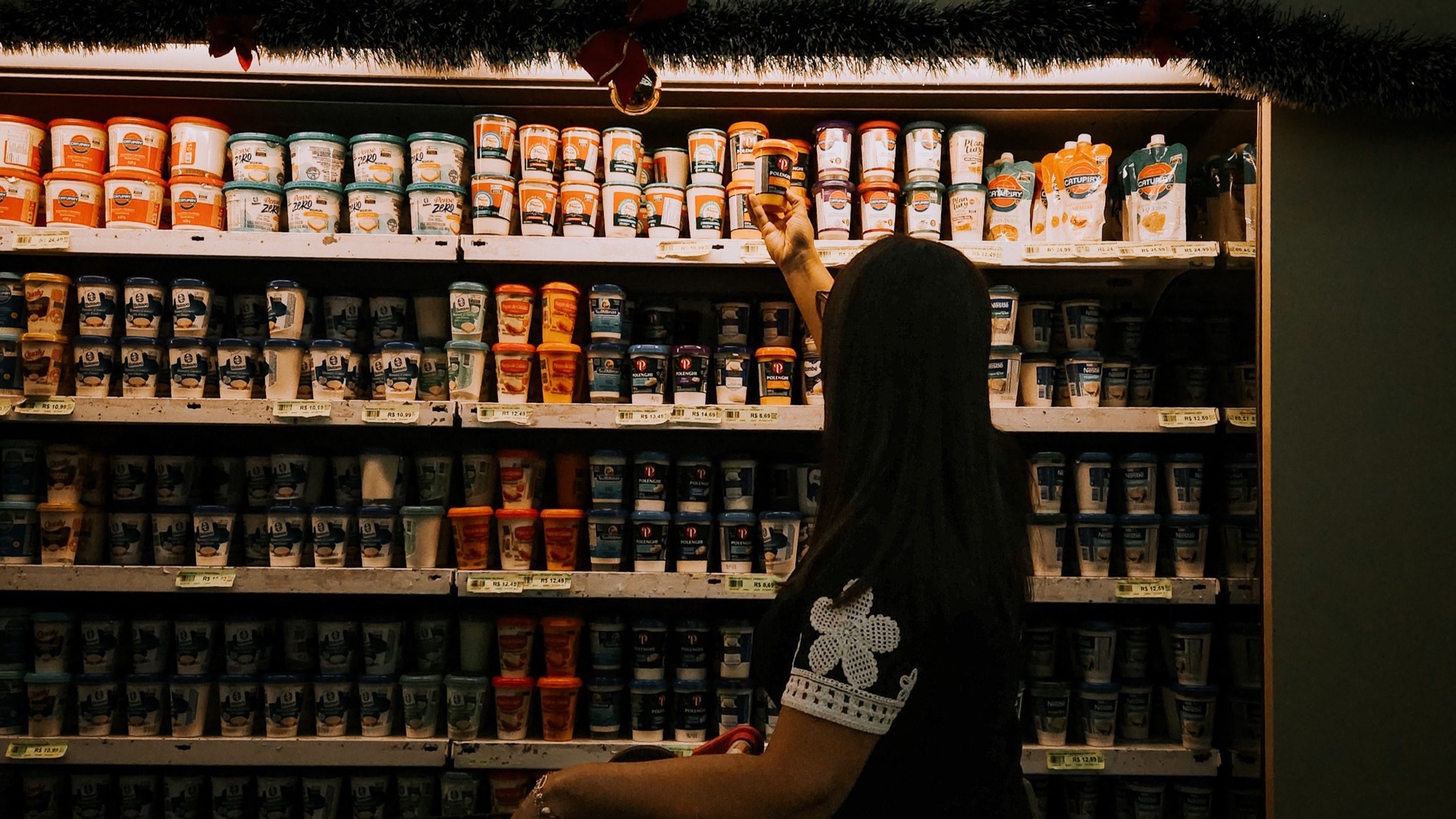
A CPG marketing agency should not treat retail media and paid social as interchangeable places to spend the same budget. They sit at different points in the buying process, use different signals and often send shoppers to different destinations.
Retail media is usually closest to an active shopping environment. Paid social can introduce the product, demonstrate it and shape demand before the shopper searches a retailer. A sensible agency scope connects those jobs without pretending that an attributed sale proves the same thing in both channels.
The right operating model starts with distribution, inventory, contribution and the launch question—not a universal percentage split.
What should a CPG marketing agency own?
The agency should make ownership explicit across five areas:
- Channel job: what retail media, paid social and any supporting programmatic work are supposed to accomplish.
- Commercial readiness: where the product is stocked, whether it is available and whether contribution can support acquisition.
- Creative and destination: what message runs, where the click lands and whether the shopper can actually buy.
- Measurement: which results are attributed, which are incremental and which remain unknown.
- Decision cadence: who changes budgets, creative, product priorities and retailer plans based on the evidence.
If one agency manages both channels, it should own the coordination. If separate partners manage them, the brand still needs a named owner for the shared plan and measurement definitions.
Retail media and paid social have different jobs
| Question | Retail media is often stronger when… | Paid social is often stronger when… |
|---|---|---|
| Buyer state | The shopper is already browsing or searching in a retail environment | The audience may not know the product or be actively shopping yet |
| Product job | Capture category, competitor or branded shopping intent | Create recognition, explain the use case or build a reason to care |
| Destination | A retailer product detail page or retailer storefront is ready | A brand site, retailer page or landing experience can continue the story |
| Creative need | Product, offer, reviews, availability and retail context do the heavy lifting | Demonstration, creator content, education and repeated exposure matter |
| Primary evidence | Retailer-attributed sales, new-to-brand signals, product-level traffic and availability | Reach, attention, qualified traffic, conversion and lift evidence where available |
| Common risk | Paying for demand the retailer might have captured anyway | Creating demand that cannot find the product or convert at the destination |
Neither column is a verdict. CPG brands sell through different combinations of ecommerce, marketplaces, grocery, mass retail, specialty retail and direct-to-consumer sites. The agency's job is to map the actual path rather than force the brand into a favorite channel.
Start with distribution and availability
Before allocating media, list where the product can be purchased by market, retailer and format. Include online availability, store coverage, inventory health, retailer search visibility and product-page quality.
Paid social can create interest outside the product's available footprint. Retail media can send traffic to an out-of-stock item. Both waste money in different ways.
The agency should have a process for suppressing or reducing investment when availability breaks, and for expanding only where the product can support the demand. Amazon's rapid retail analytics documentation, for example, treats sales, traffic and inventory as connected retail signals. That does not make hourly optimization appropriate for every brand, but it illustrates why media planning cannot be separated from retail operations.
Give each channel a launch-stage job
Before broad distribution
The priority may be learning rather than scale. Paid social can test whether buyers understand the problem, product and reason to believe. Retail media may be limited if distribution is narrow or product pages lack reviews and content.
Do not spend aggressively to manufacture a launch story while retailer basics are unfinished.
At retailer launch
Retail media can help the product appear where shoppers are already looking. Paid social can create awareness and direct qualified audiences to the retailer or a store-locator experience.
The coordination question is specific: which creative and geography support which retailer availability, and how will the brand distinguish capture from demand creation?
During repeatable growth
Once distribution, inventory and contribution are stable, the agency can test how channels work together. Retail search may capture category intent while paid social introduces new audiences or new use cases. Programmatic or connected TV may add reach, but only when the measurement plan and economics justify the extra layer.
When velocity or margin weakens
More media is not automatically the answer. Review product availability, pricing, promotion, reviews, retailer content, competitive placement, creative fatigue and contribution. The correct decision may be to narrow the SKU set, change the destination or stop funding a weak market.
Separate attributed sales from incremental lift
Retail media networks can report attributed sales and advertiser ROAS. Those metrics are useful for operating campaigns, but they do not automatically show how many sales would have happened without the ads.
The same caution applies to social-platform attribution. An ad receiving credit does not by itself prove that the channel created the purchase.
Ask the agency to label each result:
- Delivery evidence: impressions, reach, clicks and spend.
- Attributed outcome: a platform or retailer connected the exposure or click to a reported sale.
- Commercial outcome: revenue, contribution, new-customer value or retailer velocity changed in a way the business can observe.
- Incremental evidence: a controlled test, lift study, matched-market analysis, marketing-mix model or other defensible method estimates what the media added.
Amazon describes marketing-mix models as tools that account for media and non-media factors such as price, promotions and competitor activity. That distinction matters for CPG because retailer promotions, distribution changes and seasonality can move sales at the same time as advertising.
An agency does not need a sophisticated incrementality study for every small test. It does need to stop presenting attributed revenue and incremental revenue as synonyms.
Build the creative plan around the channel job
Retail media creative often needs to make product, pack, benefit, offer and retailer context immediately clear. Product-page content, reviews and availability become part of the ad experience.
Paid social has more room to demonstrate the product, show the consumption occasion, introduce a founder or creator, handle an objection and make a new use case memorable. It still needs a realistic destination and a way to buy.
The agency should decide what stays consistent across channels and what changes. The product claim may stay the same while the execution changes from a retailer search placement to a creator demonstration. Reusing the same static asset everywhere is efficient only if it still fits the buyer's context.
Usage rights also need a named owner. If creator content runs in paid social and retailer media, the agreement must cover both uses, the full term and the relevant parties. See BPM's UGC usage-rights checklist before assuming a creator post can follow the product into every paid placement.
Use this CPG channel and agency-scope matrix
Complete one row for each product, market or launch stage that materially changes the decision.
| Input | Current evidence | Retail media job | Paid social job | Owner / next decision |
|---|---|---|---|---|
| Distribution | Retailers, markets and store/online coverage | |||
| Availability | Inventory, out-of-stock risk and replenishment | |||
| Product page | Content, reviews, price and conversion readiness | |||
| Contribution | Margin, retailer costs, promotion and acceptable acquisition cost | |||
| Shopper intent | Branded, category, competitor and discovery behavior | |||
| Creative readiness | Pack, demonstration, proof, creator rights and adaptations | |||
| Destination | Retailer page, brand site, marketplace or store locator | |||
| Measurement | Attribution, sales, new-to-brand and incremental evidence | |||
| Test question | The decision this budget is expected to answer |
If the team cannot complete the first four rows, a media split is premature.
The “fund neither yet” gate
Hold or narrow investment when any of these conditions would make the test misleading:
- the product is not consistently available in the target market;
- the retailer page has incorrect pricing, weak content or a broken purchase path;
- contribution economics cannot support the proposed acquisition cost;
- the product claim or creator rights have not been approved;
- the brand cannot identify the decision the test is meant to support;
- measurement definitions differ by partner and nobody owns reconciliation; or
- the budget is too fragmented to create useful evidence in either channel.
This is not an argument for waiting until everything is perfect. It is a way to distinguish a manageable imperfection from a condition that makes the media test uninformative.
Questions to ask a CPG marketing agency
- How will you map retailer distribution and inventory into targeting and budget decisions?
- Which channel is capturing existing shopping intent, and which is expected to create demand?
- Who owns retailer search, paid social, programmatic, creative and product-page coordination?
- How do you choose the product or SKU set to fund?
- What destination will each ad use, and who fixes it when it underperforms?
- Which sales metrics are attributed, and what would count as incremental evidence?
- How will promotions, seasonality and distribution changes be reflected in reporting?
- What changes the retainer scope: retailer count, SKU count, creative production, reporting or measurement work?
- What decision will the first test allow us to make?
Be cautious when a proposal starts with a fixed channel split, promises retail-media results without seeing distribution and economics, or treats a single platform's ROAS as the complete business case.
Choose the operating model, then the budget
Retail media and paid social can complement each other, but only when their jobs are clear. One captures shoppers near a retail decision. The other can create recognition, explain the product and give people a reason to look for it. Both can waste money when inventory, creative, destinations or measurement are disconnected.
The agency should make those tradeoffs visible and give the brand a decision system it can use after the first campaign report.
For help connecting retail context, paid social creative and cross-channel media planning, explore BPM's CPG marketing services and paid social services, or start a conversation.